Live surgeryJune 4, 202648:583 speakersAvailable in: IT / EN
SENORITA technique for early gastric cancer
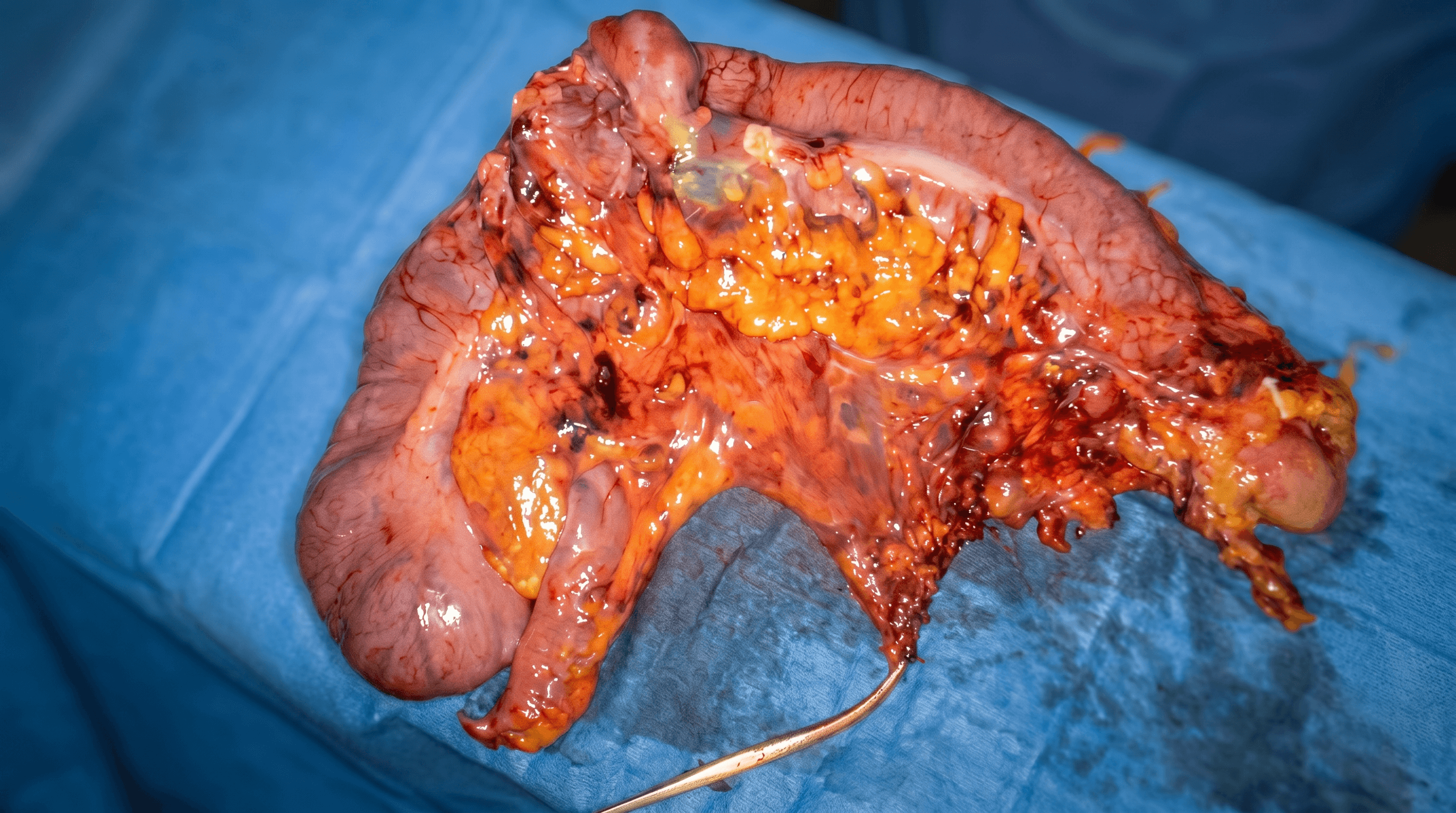
Gian Luca Baiocchi applies the SENORITA technique — ICG-fluorescence sentinel-node navigation — to spare the stomach in a 93-year-old woman with early gastric cancer: the lesion is removed by endoscopic submucosal dissection, while a tailored sentinel-node lymphadenectomy stages the nodes.
Free content for members
Sign in to watch this episode
Full surgical procedures, chapter-marked discussions, and bilingual transcripts — all free for registered members.
Full episodes, chapters, and case framing
Bilingual transcripts (IT / EN)
Save favorites and resume where you left off
Clinical case
Cancro gastrico precoce: adenocarcinoma clinico T1 su ulcera gastrica cronica, con neoplasia intraepiteliale (displasia di basso e alto grado) della grande curvatura al passaggio antro-corpo, parete anteriore.
Patient framing as discussed at case introduction
SexF
Age93 anni
StagecT1 cN0 M0
DiagnosisCancro gastrico precoce: adenocarcinoma clinico T1 su ulcera gastrica cronica, con neoplasia intraepiteliale (displasia di basso e alto grado) della grande curvatura al passaggio antro-corpo, parete anteriore.
Prior treatmentTrattamento conservativo del sospetto di ulcera gastrica perforata (ottobre 2025); sorveglianza endoscopica seriata; dissezione sottomucosa endoscopica (ESD) eseguita nella stessa seduta.
Clinical historyRicovero d'urgenza nell'ottobre 2025 per ematemesi e dolore addominale, TC con sospetto di ulcera gastrica perforata, gestita in modo conservativo. Sorveglianza endoscopica: prima biopsia gastropatia cronica (Sydney 2-0-1-1-0, OLGA 1, OLGIM 1) con minime cellule atipiche; a 3 mesi pseudodepressione e tessuto rilevato, biopsie indicative di neoplasia intraepiteliale; mappatura su quattro aree (A, C, D positive per displasia, B negativa).
NotesApproccio combinato: ESD della lesione (dott. Roberto Grazia, ~3 ore) + linfadenectomia laparoscopica del linfonodo sentinella ICG-guidata, con stomaco preservato. ICG iniettato a monte e a valle del tumore; asportazione en bloc del territorio di drenaggio (stazione 4D). Approccio tailored secondo il concetto SENORITA (≥5 linfonodi, senza analisi intraoperatoria nel protocollo modificato). La stazione 6 risultava sede di iniezione e non un vero linfonodo.
Overview
A live case by Gian Luca Baiocchi (Cremona Hospital) addressing a delicate problem in gastric cancer surgery: how to treat early gastric cancer in a very elderly patient without overtreating her. The patient is a 93-year-old woman, admitted as an emergency in October 2025 for hematemesis and abdominal pain with a CT suspicion of a perforated gastric ulcer, managed conservatively. Subsequent endoscopic surveillance documents progression from chronic gastropathy (Sydney 2-0-1-1-0, OLGA 1, OLGIM 1) to intraepithelial neoplasia with low- and high-grade dysplasia, mapped across four areas of the antrum and body. Endoscopic ultrasound suggests a clinical T1 adenocarcinoma with doubtful submucosal infiltration, and CT with gastric distension shows an irregular thickening of about 2 cm on the greater curvature, with no adenopathy.
The central issue is the strategic choice debated at the multidisciplinary board: a distal gastrectomy with a very high transection line would be overtreatment in a 93-year-old, while endoscopic treatment alone of a possible submucosal T1 would undertreat the nodal side. The adopted solution combines both worlds: Dr. Roberto Grazia, head of digestive endoscopy, removes the lesion with an endoscopic submucosal dissection (ESD) lasting about three hours and injects indocyanine green upstream and downstream of the tumor; the surgeons then address the nodal basin laparoscopically, leaving the stomach in place. This is the SENORITA technique (SEntinel NOde oRIented Tailored Approach): a tailored, sentinel-node-guided lymphadenectomy that preserves the organ.
The laparoscopic part shows the opening of the gastrocolic ligament through the adhesions of the prior perforation, ICG mapping of the nodal stations (4D, 4Sb and 6), and the out-loud reasoning, shared with the room, about how far to extend the dissection: the true drainage territory (station 4D) is removed en bloc while pointless lymphadenectomy is avoided. Baiocchi recalls the SENORITA trial — at least five nodes to be retrieved and analyzed, with intraoperative node analysis dropped in their modified protocol — and openly discusses who should perform the resection (endoscopist vs surgeon), comparing ESD, wedge resection and segmental resection, including the memory of a complete perforation after endoscopy-only treatment. The final fluorescence check confirms no significant residual green (station 6 was only an injection site, not a node), a spiral drain is placed, and the nodes are retrieved in an endobag. Baiocchi's closing remark distills the lesson: a technically simple operation, but a difficult one in terms of surgical strategy.
Topics
Early gastric cancer in the very elderly: balancing over- and undertreatment
From chronic gastropathy to intraepithelial neoplasia: endoscopic surveillance and targeted biopsies
Histological scoring: Sydney, OLGA and OLGIM
Multi-area biopsy mapping of the gastric antrum and body
Staging with endoscopic ultrasound (cT1) and CT with gastric distension
Multidisciplinary decision: ESD + nodal surgery instead of gastrectomy
Endoscopic submucosal dissection (ESD) of the gastric lesion
ICG injection upstream and downstream of the tumor for sentinel-node navigation
ICG mapping of nodal stations 4D, 4Sb and 6
Tailored lymphadenectomy guided by the true drainage territory
The SENORITA concept and trial: at least five nodes and the role of intraoperative analysis
Who performs the resection? ESD vs wedge vs segmental resection
Managing adhesions from a prior ulcer perforation
Nodal retrieval in an endobag and spiral-drain placement
Organ-sparing strategy: preserving the stomach in the very elderly
Tools used
Verde di indocianina (ICG)Telecamera laparoscopica con modalità fluorescenza ICGGastroscopio per dissezione sottomucosa (ESD)Aesculap Caiman (dissettore/sealer bipolare)Strumento bipolareTrocar laparoscopici (10 mm)Filo autobloccante V-LocClip emostaticheEndobag (sacchetto per recupero linfonodi)Drenaggio a spirale (spiral drain)
You might also be interested in
Episodes that share faculty, organs, or topics with this one.